
Service Hotline
Service Hotline
Energy discrimination technology in radioactive measurement instruments manufactured by instrument manufacturing and its role in nuclide identification
Radioactive measurement instruments play a crucial role in the field of modern science and technology, especially in nuclear medicine, nuclear physics, environmental monitoring, and industrial testing. These instruments can detect and identify radioactive substances, which is of great importance for ensuring public safety and environmental health. Among them, energy discrimination technology is one of the core technologies of radioactive measurement instruments, playing a crucial role in nuclide identification.
The working principle of radioactive measurement instruments is based on detecting the rays emitted by radioactive substances (such as α, β, γ rays). In practical applications, radioactive measurement instruments need to distinguish between different energy rays to accurately
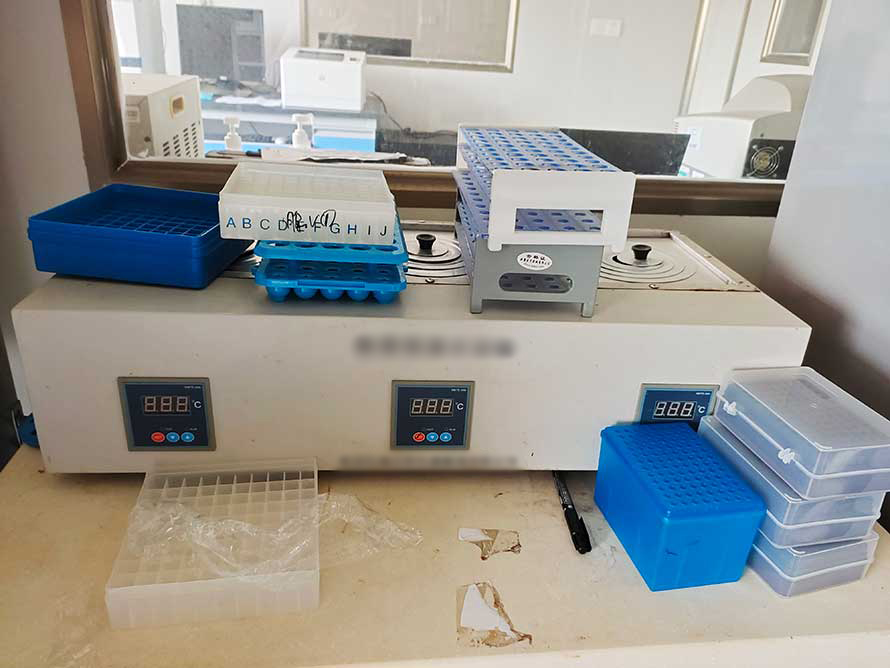 identify the type and properties of radioactive substances. Energy discrimination technology is designed to solve this problem. By accurately measuring the energy of rays, energy discrimination technology determines the type and properties of rays, and then identifies radioactive substances.
Energy discrimination technology mainly includes photon counting technology, pulse height analysis technology, and time resolution technology. Among them, photon counting technology identifies radioactive substances by measuring the energy of photons, with high sensitivity and accuracy; pulse height analysis technology identifies the type of rays by analyzing the height of pulses; time resolution technology distinguishes different energy rays by measuring the time interval between pulses.
The role of energy discrimination technology in nuclide identification is mainly reflected in the following aspects:
Improve identification accuracy: Energy discrimination technology can accurately measure the energy of rays, thereby identifying the type of radioactive substances and improving identification accuracy.
Reduce false alarm rates: Energy discrimination technology can effectively distinguish between different energy rays, reducing false alarm rates and ensuring the reliability of radioactive measurement instruments.
Adapt to various radioactive substances: Energy discrimination technology can adapt to various radioactive substances, providing effective solutions for different application scenarios.
Provide more detailed information: Energy discrimination technology can provide more detailed information, such as the type and intensity of radioactive substances, which provides strong support for scientific research and practical applications.
In summary, energy discrimination technology plays a crucial role in radioactive measurement instruments and is one of the key technologies for improving the performance of radioactive measurement instruments. In the future, with the continuous development of technology, energy discrimination technology will become more accurate and efficient, providing a broader space for the application of radioactive measurement instruments.
Copyright ©2025 Instrumentation Manufacturer
Addresses: Phone number: E-Mail:

Our Businesses