
Service Hotline
Service Hotline
The development of super-resolution imaging technology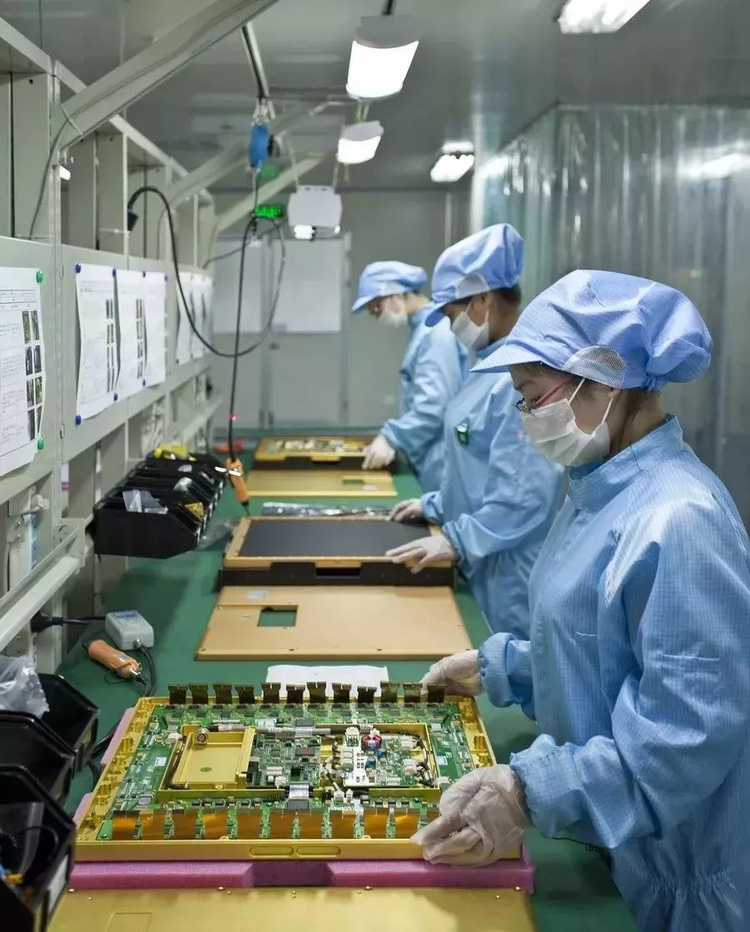 and manufacturing process difficulties in instrument-manufactured microscopes
Microscopes, as indispensable tools in fields such as life science, materials science, and medical research, are of great significance for the research in these fields. The super-resolution imaging technology of microscopes, especially the super-resolution imaging technology of optical microscopes, has been a research hotspot in recent years, which can break through the resolution limit of traditional optical microscopes and achieve high-precision observation of microstructures such as cells and tissues.
First, the development of super-resolution imaging technology
Super-resolution imaging technology mainly includes light sheet microscopy, single-molecule localization microscopy, super-resolution fluorescence microscopy, coherent diffraction imaging, etc. Among them, single-molecule localization microscopy and super-resolution fluorescence microscopy are the most active research fields at present. Single-molecule localization microscopy determines the position of a single molecule by measuring its fluorescence signal, thereby achieving imaging at the molecular level within cells; super-resolution fluorescence microscopy achieves high-precision imaging of subcellular structures within cells by introducing multiple fluorescence labeling, photo bleaching recovery, photon counting, and other technologies. The development of these technologies enables us to observe the finer structures and processes within cells at higher resolutions, providing strong support for research in fields such as life science, materials science, and medical research.
Second, difficulties in manufacturing processes
Although super-resolution imaging technology has made significant progress, it still faces many challenges in manufacturing processes. Firstly, super-resolution imaging technology requires the use of high-precision optical components, such as high-resolution objectives and high-precision optical components, which requires manufacturing processes to have high precision and stability. Secondly, super-resolution imaging technology requires the use of high-precision light sources and detectors, which requires manufacturing processes to have high stability and reliability. Finally, super-resolution imaging technology requires the use of high-precision control and algorithms, which requires manufacturing processes to have high intelligence and automation. These challenges not only require innovation in manufacturing processes but also require interdisciplinary research and cooperation in fields such as materials science, optical engineering, and electronic engineering to achieve further development and application of super-resolution imaging technology.
In summary, the continuous progress and application of super-resolution imaging technology is of great significance in promoting the development of fields such as life science, materials science, and medical research. In this process, we not only need to pay attention to the development of the technology itself but also need to focus on the challenges and solutions of manufacturing processes to promote the continuous progress and application of super-resolution imaging technology.
Copyright ©2025 Instrumentation Manufacturer
Addresses: Phone number: E-Mail:

Our Businesses