
Service Hotline
Service Hotline
How to Ensure the Dimensional Accuracy and Surface Quality of Workpieces in Turning Process of Precision Instrument Manufacturing
In the manufacturing of precision instruments, turning is an important processing technology that plays a crucial role in ensuring the dimensional accuracy and surface quality of workpieces. Turning processing can achieve high precision and efficiency, and is suitable for workpieces of various shapes and sizes. Especially when processing parts with high precision and complex contours, the turning process can ensure the dimensional accuracy and surface quality of the workpieces.
The principle of turning technology
Turning processing is a cutting processing technology carried out by lathes, which takes the rotation of the workpiece as the benchmark and carries out cutting processing on the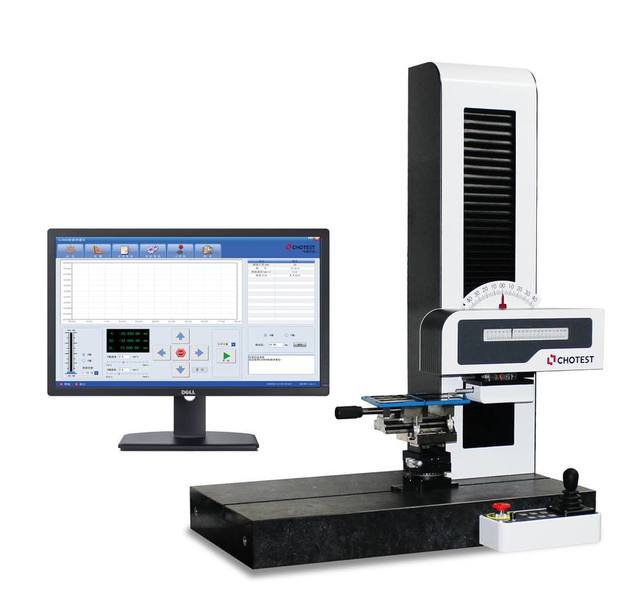 workpiece through the tool. Turning processing has the advantages of high processing efficiency, strong adaptability, and high accuracy, and is suitable for processing workpieces of various materials and shapes.
The role of turning technology in ensuring the dimensional accuracy and surface quality of the workpiece
Precision turning
Precision turning is a branch of turning technology with high processing accuracy, mainly used for processing workpieces with high precision requirements. During the precision turning process, by adjusting tool parameters, cutting speed, feed rate, and other process parameters, the dimensional accuracy and surface quality of the workpiece can be ensured. In addition, precision turning can also further improve the processing accuracy and surface quality by using high-precision tools and fixtures.
Adopt reasonable cutting parameters
Reasonable cutting parameters are the key to ensuring the dimensional accuracy and surface quality of the workpiece in turning processing. The selection of parameters such as cutting speed, feed rate, and cutting depth directly affects the processing accuracy and surface quality of the workpiece. By reasonably selecting cutting parameters, the cutting forces and cutting heat during the processing process can be effectively controlled, thereby reducing processing errors and surface roughness, ensuring the dimensional accuracy and surface quality of the workpiece.
Improve the accuracy of tools and fixtures
The accuracy of tools and fixtures is an important factor in ensuring the accuracy and surface quality of turning processing. By using high-precision tools and fixtures, the processing accuracy and surface quality can be improved. In addition, regular maintenance and calibration of tools and fixtures to ensure they are always in the best condition is also an important measure to ensure processing accuracy and surface quality.
Improve the clamping accuracy of the workpiece
The clamping accuracy of the workpiece directly affects the accuracy of turning processing. Before turning processing, the clamping accuracy of the workpiece should be ensured to avoid deformation or displacement of the workpiece during the processing process. By using suitable fixtures, jigs, and positioning devices, the clamping accuracy of the workpiece can be improved, thereby ensuring processing accuracy and surface quality.
Improve the stability of the processing environment
The stability of the processing environment also has an important impact on the accuracy and surface quality of turning processing. During the turning process, a stable processing environment should be maintained, including constant temperature, humidity, and vibration conditions. By taking appropriate measures, such as using constant temperature and humidity equipment, vibration reduction devices, etc., the stability of the processing environment can be improved, thereby ensuring processing accuracy and surface quality.
Summary
The turning process plays an important role in the manufacturing of precision instruments, ensuring the dimensional accuracy and surface quality of the workpiece. In order to improve the accuracy and surface quality of turning processing, it is necessary to start from precision turning, reasonable selection of cutting parameters, improving the accuracy of tools and fixtures, improving the clamping accuracy of the workpiece, and improving the stability of the processing environment. Only in this way can the quality and reliability of precision instrument manufacturing be ensured.
Copyright ©2025 Instrumentation Manufacturer
Addresses: Phone number: E-Mail:

Our Businesses